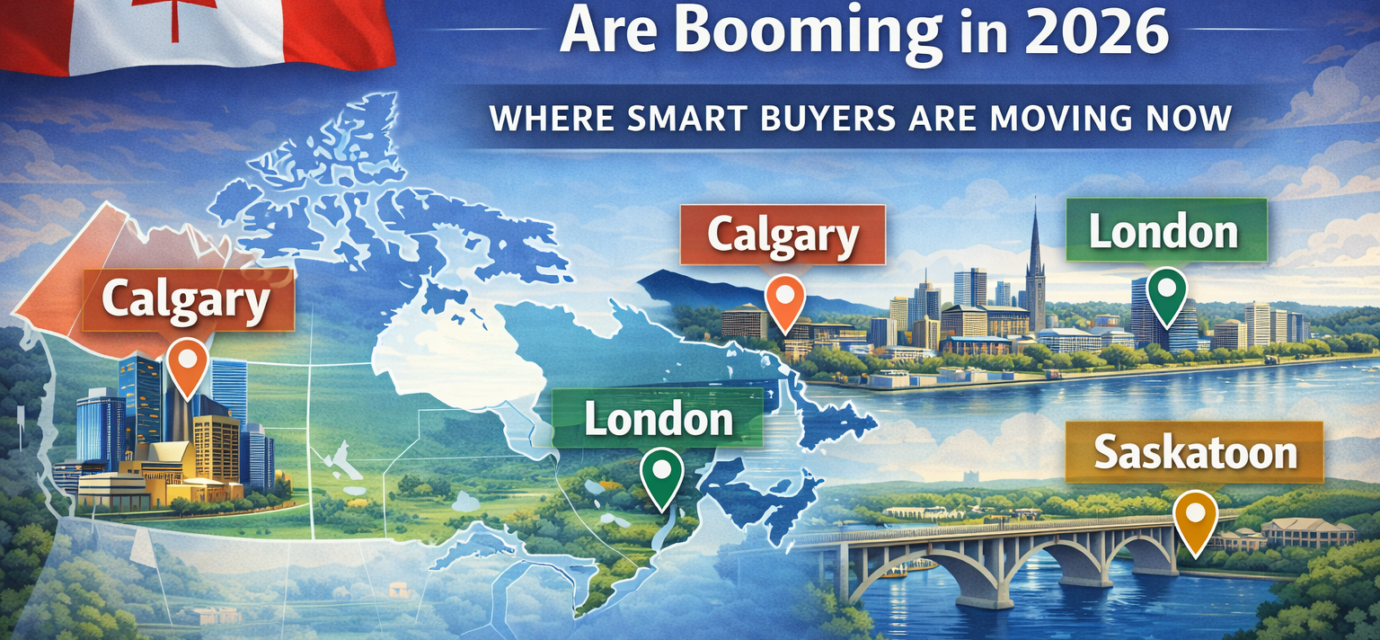
Canada’s Secondary Cities Are Booming in 2026: Where Smart Buyers Are Moving Now

While Toronto and Vancouver still dominate headlines, 2026 is shaping up to be the year of Canada’s secondary cities. Rising home prices, immigration growth, hybrid work flexibility, and infrastructure expansion are shifting buyer attention toward smaller — but fast-growing — urban markets.
In this research-based trend analysis, we explore why secondary cities are outperforming expectations and where real estate investors and homebuyers should focus next.
Why Secondary Cities Are Gaining Momentum
Over the past five years, affordability pressure in major hubs like Toronto and Vancouver has pushed buyers to explore alternative markets.
Key drivers include:
1️⃣ Affordability Gap
Average home prices in major metros remain significantly higher than in emerging cities. Buyers can often secure detached homes in secondary cities for the price of a condo in larger urban centers.
2️⃣ Remote & Hybrid Work
Post-pandemic work models have reduced the need to live close to downtown cores. Professionals now prioritize lifestyle, space, and lower cost of living.
3️⃣ Immigration Growth
Canada continues to welcome high levels of immigrants annually, increasing housing demand beyond primary metropolitan areas.
4️⃣ Infrastructure Expansion
Transit improvements, healthcare investments, and university expansions are fueling long-term real estate confidence.
Top Trending Secondary Cities in 2026
1. Calgary, Alberta
Calgary has emerged as one of the hottest markets in Western Canada.
Why Calgary?
- No provincial sales tax
- Strong energy sector rebound
- Growing tech startup ecosystem
- Comparatively affordable detached homes
Rental yields are also attracting investors relocating capital from higher-priced provinces.
2. London, Ontario
Located between Toronto and Detroit, London is benefiting from spillover demand.
Market Highlights:
- Expanding healthcare & education sectors
- Growing student population
- Infrastructure development projects
- Increased rental demand
Investors are targeting student housing and duplex conversions.
3. Halifax, Nova Scotia
Halifax is gaining national attention for its coastal lifestyle and economic diversification.
Why It’s Trending:
- Strong population growth
- Military and port-related employment stability
- Growing tech and ocean sciences sector
- Lifestyle appeal attracting remote workers
Inventory remains tight, keeping upward pressure on prices.
4. Saskatoon, Saskatchewan
Often overlooked, Saskatoon is quietly becoming an investor-friendly market.
- Attractive Factors:
- Lower entry price points
- Stable rental demand
- Agricultural and resource-based economy
- Affordable multi-family opportunities
Cash-flow investors are particularly interested in this market.
Investment Trends Shaping 2026
📊 Build-to-Rent Communities
Developers are focusing on purpose-built rental projects in secondary cities where rental demand is rising faster than supply.
🏡 Multi-Generational Housing
With higher mortgage rates, families are pooling resources to purchase larger homes together.
🌱 Sustainable Developments
Energy-efficient homes and green-certified properties are becoming more desirable — particularly among younger buyers.
Risks to Consider
- Despite strong growth signals, buyers should evaluate:
- Interest rate volatility
- Provincial housing policies
- Local employment dependency (resource-driven markets can fluctuate)
- Supply pipeline impact on future pricing
Secondary markets may grow quickly — but they can also cool quickly without diversified economic drivers.
What This Means for Buyers & Investors
For First-Time Buyers:
Secondary cities offer better entry points and long-term appreciation potential.
For Investors:
Stronger rental yields and lower purchase prices improve cash-flow opportunities.
For Developers:
Population growth outside major metros presents long-term housing demand opportunities.
Final Takeaway
Canada’s real estate story in 2026 is no longer just about Toronto or Vancouver. Smart capital is flowing into growing secondary cities where affordability, lifestyle, and economic expansion intersect.
Those who identify infrastructure growth, employment diversification, and migration patterns early will be best positioned to benefit from this next wave of real estate evolution.